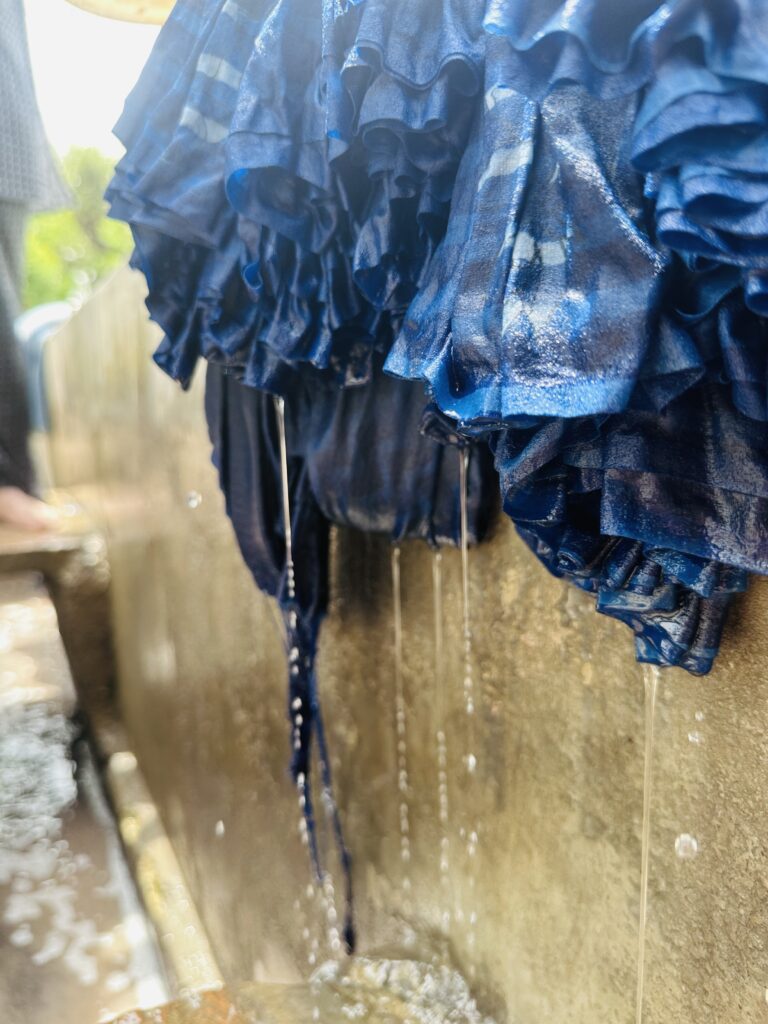
When Craft Meets Contemporary Design
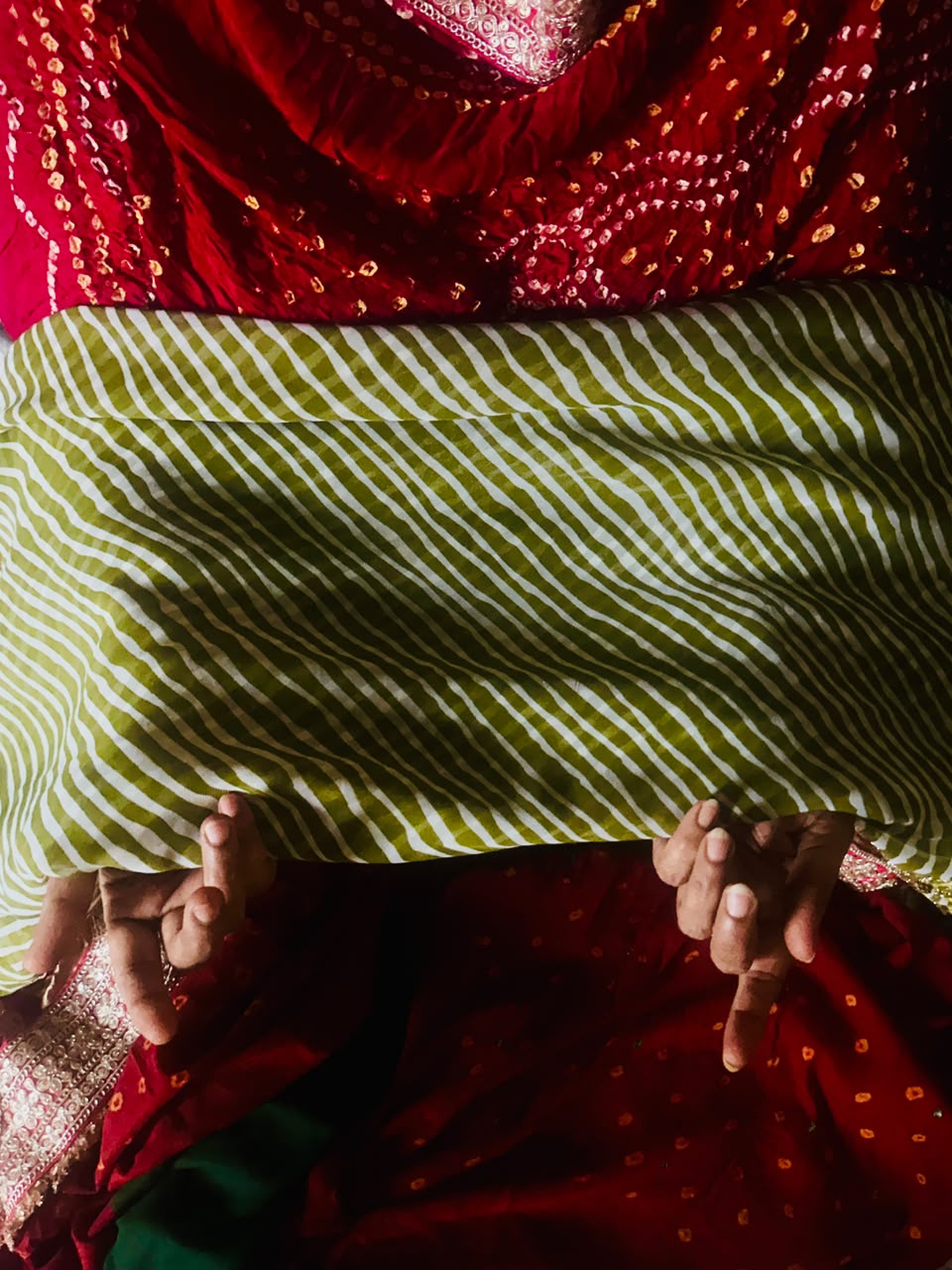
Why preserving tradition is also about improving communication.
There is a tendency to romanticise traditional craft.
We speak about the patience of the artisan, the beauty of handmade processes, and the value of preserving techniques that have travelled across generations. All of that is true. Yet, somewhere between the artisan’s workshop and the contemporary designer’s studio, another conversation quietly unfolds, one that receives far less attention.
It is the conversation about communication.
Over the past few weeks, I was working with Leheriya, developed by the Rangrez community of Rajasthan. Like every traditional craft, the process demanded patience. The fabric moved through hands that have inherited knowledge over generations, where experience often replaces written instructions and colour is understood through memory as much as practice.
When the textile arrived, it was beautifully executed.
The colour, however, was not the one I had envisioned.
This wasn’t a question of craftsmanship. It was a question of translation.
In a contemporary design studio, colour is often reduced to a Pantone reference, a digital swatch or a hexadecimal code. Precision is expected because systems have been built around it.
Within many traditional craft practices, colour is communicated differently. It lives in conversations, familiarity with dyes, accumulated experience and interpretation. The process remains deeply human, and that is precisely what gives it character.
Neither approach is superior.
They simply belong to different worlds.
The challenge begins when those worlds are expected to work together without a shared language.
What appears to be a minor discrepancy in colour can have significant consequences. A garment awaiting production may be delayed. An occasion may pass. A designer may choose to move towards a digitally printed alternative, not because it carries greater value, but because it offers greater predictability.
That decision is rarely a rejection of craft.
More often, it is a response to uncertainty.
The longer I spend documenting and working alongside traditional textile practices, the more I realise that preserving craft is about far more than safeguarding techniques. It is equally about creating systems that allow artisans, designers and clients to communicate with greater clarity.
Shade references.
Material documentation.
Production timelines.
Shared expectations.
These are not administrative details.
They are design tools that strengthen the relationship between tradition and contemporary practice.
Craft does not need to become faster in order to remain relevant.
Nor should it lose the patience that makes it meaningful.
But if we hope for traditional craftsmanship to continue finding its place in contemporary design, then perhaps our responsibility extends beyond preservation.
Perhaps it lies in building better bridges.
Not between the past and the future.
But between the people who are trying to create them together.
House of Abhidha Journal
- Tags: Fashion Show, Press Releases